
OEM Carbon-Based Soil Conditioner: Boosting Soil Vitality with Custom Formulations
2026-08-13
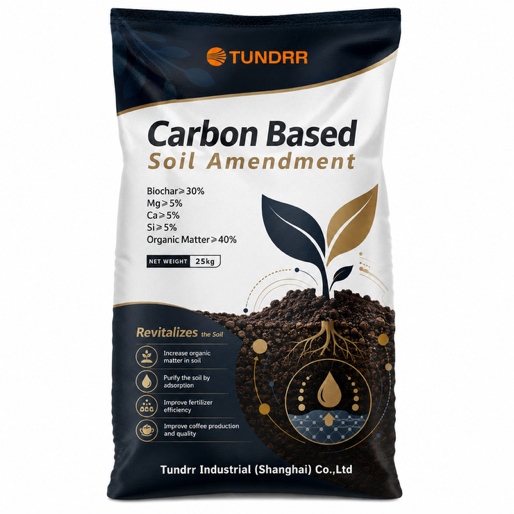
Some soils go quiet long before they're actually dead. If your standard amendments aren't bringing fields back to life, the problem might not be the nutrients—it might be the one-size-fits-all approach. Tundrr is changing that with OEM carbon-based soil conditioners, blending custom formulations to match the exact texture, pH, and microbial profile of your land. Instead of forcing soil to adapt to a product, the product adapts to the soil. Here's how that shift unlocks vitality that generic conditioners leave on the table.
Matching Carbon Sources to Your Soil's Personality
Soil isn't just a backdrop for roots; it has quirks. Sandy ground lets water slip through fast and struggles to hold onto nutrients, so it benefits from carbon that breaks down slowly and improves structure—think woody mulch, composted bark, or biochar instead of quick-to-vanish green manures. Clay, by contrast, already clings to water and nutrients but often needs help opening up. Here, fine compost and leaf mold work into those tight spaces, while fresh straw or cover crop residues can feed microbes that create the sticky glues improving tilth.
Acidic or alkaline soils also respond differently to carbon inputs. If your pH trends low, adding wood ash alongside compost can help balance things out while still feeding fungi and bacteria. In high-pH soils, peat moss or pine needle mulch may nudge conditions toward a more neutral comfort zone for many garden plants. But don't guess—test first, then choose a carbon source that nudges the existing chemistry rather than fighting it.
Timing matters too. A heavy clay bed in spring might turn into a brick if you dig in fresh manure or high-nitrogen green waste all at once. Work with your soil's natural rhythm: add coarse, slow-rotting carbon in autumn so winter freezes and thaws can break clods apart, or apply a light topdressing of fine compost in spring to kickstart microbial activity without suffocating the root zone. The goal isn't to impose a generic recipe—it's to read what your soil already does well and give it the carbon companion that suits its temperament.
Why Generic Amendments Miss the Mark
Generic amendment language tends to operate on the surface, assuming that all changes fit the same mold. But real-world modifications rarely do. A deadline shift from one calendar quarter to another may look simple, yet it can ripple into payment schedules, delivery obligations, and default triggers. When the amendment clause doesn't spell out how to handle those interdependencies, the supposed fix merely plants the seed for a later dispute over intent.
The gap between broad wording and actual need often shows up in approval requirements. A boilerplate amendment might say changes need written consent from both parties, but it stays silent on who must sign if one side is a newly merged entity or if an authorized representative has changed. That silence forces everyone to stop and negotiate the amendment’s own validity, turning what should be a quick update into a second round of contract drafting.
The Underground Market: Feeding Microbes That Feed Crops
Roots don't just take from the soil—they negotiate. At the tip of every root hair, sugars and amino acids leak into the surrounding earth, a kind of open-air bazaar where bacteria and fungi gather to trade. A corn plant can pump nearly a fifth of the carbon it captures from photosynthesis into this underground economy, not as waste, but as payment. The currency buys something roots cannot extract on their own: phosphorus, nitrogen, water, even protection from pathogens. In return for a steady drip of carbohydrates, mycorrhizal fungi extend their hyphae far beyond the root's reach, mining microscopic pores and hauling nutrients back like tiny freight lines.
The exchange is not always peaceful. Some microbes try to cheat, taking sugars without giving much back. Plants can sense this and reroute their exudates to more generous partners, starving the freeloaders. It is a market with real competition, shaped by millions of years of coevolution. Legumes, for example, build specialized root nodules that house nitrogen-fixing bacteria, but only after screening them with chemical signals—a sort of background check before granting access to the inner rooms. Farmers who understand this hidden commerce can reduce fertilizer use by feeding the soil's native traders instead of bypassing them entirely.
But the market stalls are fragile. Tillage, monocropping, and heavy synthetic inputs can collapse the microbial diversity that keeps nutrient cycling alive. When the soil food web thins out, plants start paying more for less, and fields become dependent on outside help. Building the underground market back takes time and a shift in mindset: cover crops, reduced disturbance, and organic matter all act as market infrastructure. The payoff is not just higher yields but a farm that can weather drought, disease, and rising input costs with less intervention.
From Dust to Structure: Rebuilding Tilth with Precision Blends
When a field turns to dust, the problem is rarely just a lack of organic matter. It is the collapse of soil architecture: the loss of stable aggregates, pore spaces, and the fungal and bacterial bridges that hold mineral particles together. Rebuilding tilth from that state means moving beyond generic compost applications and toward blends designed around what a specific soil actually lacks. A precision blend might combine a low-salt, lignin-rich compost with a modest amount of gypsum to flocculate clay, plus a small dose of rock dust to restore trace minerals. The exact ratios come from field tests—slake tests, penetrometer readings, and a proper soil analysis focused on aggregate stability and cation balance, not just NPK.
The real work happens at the interface between roots, microbes, and mineral surfaces. Instead of dumping a uniform rate across a whole field, precision blending allows variable application: sandy knolls receive a different carbon-to-clay ratio than heavy bottom ground. Some growers mix a fast-decomposing green manure with a slow, woody fraction to feed microbes at staggered intervals. Others add a small amount of biochar that has been co-composted with manure, so it enters the soil already loaded with nutrients and microbial life. The key is that no single input works alone; it is the blend, applied at the right time—often right before a light rain or immediately after shallow tillage—that starts rebuilding stable crumbs.
You know the structure is returning when a shovel slices in rather than bounces, when water from a thunderstorm soaks in without crusting, and when earthworm casts appear at the surface. That is not just cosmetic improvement. Better tilth means deeper rooting, more even moisture, and less need for rescue irrigation later in the season. It also means the soil can take a heavy rain without sealing, which is the difference between a crop that recovers and one that drowns. Rebuilding tilth with precision blends is slower than a quick fix, but the change is cumulative—each season of balanced additions leaves the soil a little more resilient and a little further from dust.
Your Field's Fingerprint: Custom Formulations in Action
Every field carries a unique set of soil traits, drainage patterns, and nutrient gaps that no off-the-shelf blend can fully address. When we talk about a field's fingerprint, we mean the specific combination of pH shifts, organic matter levels, and micronutrient shortages that repeat season after season. Custom formulations start here: a soil test read not as a generic report but as a map of what that particular acreage actually needs.
The real shift happens when those lab numbers meet field observation. A custom blend might lower phosphorus in a wet corner where runoff has been an issue, while bumping sulfur and zinc on a sandy ridge that dries out fast. Instead of applying the same ratio across the whole property, the mix changes with the terrain. This is where the fingerprint idea earns its keep—two neighboring farms can share the same crop and the same climate, yet their ideal nutrient recipe will differ because their biological and physical profiles do.
In practice, that means working with a formulator who asks about tillage, crop residue, irrigation timing, and even the variety's known sensitivities. The finished product may include slow-release nitrogen for a field with heavy early rains, or a higher boron load for a field that has shown hollow stems in the past. It is not about piling on more inputs; it is about removing the guesswork so each application fits the ground it lands on.
Partnering Without the Guesswork: OEM Carbon Solutions
Working with an OEM on carbon components often means navigating a maze of vague specs, delayed samples, and quality surprises. We cut through that by treating every project as a joint engineering effort, not a transactional order. From the first drawing review to the final torque test, you know exactly what you're getting: material grades, layup schedules, curing cycles, and tolerance limits. No hidden shortcuts, no 'trust us' moments.
The real difference shows up when things get tricky. Maybe your design calls for a hybrid carbon-thermoplastic hinge that needs to survive 50,000 flex cycles, or a structural tube that has to hold dimension after autoclave cure. Instead of guessing, we run small-batch trials on the same production tooling you'll use later. That means the parts you approve are the parts you get—same surface finish, same fiber alignment, same mechanical behavior. You don't have to gamble on scale-up roulette.
We also fix the communication gap that usually plagues OEM partnerships. You get a single point of contact who reads your CAD natively, understands your assembly constraints, and speaks your tolerance language. Weekly progress updates include actual photos from the shop floor, not just milestone checkboxes. If a resin batch test comes back off-target, you hear about it before it ever touches your parts. That's not over-communication; it's just how a carbon partner should operate.
FAQ
It’s a soil amendment manufactured to another brand’s specifications, with the carbon component coming from sources like biochar, humic substances, or composted plant residues. Instead of a pre-set formula, the blend is adjusted around factors like target crop, existing soil chemistry, and regional moisture patterns, so the final product fits the user’s field conditions rather than forcing the field to fit the product.
Custom blends can balance carbon-to-nitrogen ratios, adjust pH buffering capacity, and modify particle size or porosity to match the soil’s current limitations. That means the conditioner works with the native biology instead of overwhelming it. In practice, this often shows up as better aggregate stability, more consistent moisture retention, and a gradual increase in beneficial microbial activity.
It can help with compacted soils that struggle to breathe, sandy soils that lose water too quickly, and degraded plots with low organic matter. It also offers a buffer against nutrient leaching and supports root zone recovery after heavy tillage or chemical inputs. The key is matching the carbon source and particle profile to the specific problem rather than expecting one product to fix everything.
Common inputs include hardwood biochar, leonardite-derived humic acid, clean compost fines, coconut coir dust, and occasionally lignite or reed-sedge peat depending on the region and availability. Each source behaves differently in terms of surface area, decomposition rate, and cation exchange, so material selection is part of the formulation conversation rather than a fixed recipe.
Yes. For acid-loving crops, we might lean on carbon sources with a naturally lower pH and combine them with sulfur-based amendments. For alkaline or saline soils, the blend can include gypsum-compatible organic matter that improves structure without raising electrical conductivity. In drier climates, coarser particles and higher water-holding components become a priority, while humid regions may need faster-breakdown fractions to avoid waterlogging.
It usually starts with a soil test or at least a detailed description of the target area and crop. From there, we propose a base carbon profile, adjust it based on the client’s packaging, pellet size, and application equipment, then produce a small pilot batch for field evaluation. Once the client approves the results, we scale up to commercial production with the same tolerances and quality checks.
Rates depend heavily on soil texture and the condition of the existing organic matter. A common starting point is 300 to 800 pounds per acre broadcast and lightly incorporated, but for raised beds or landscaping, a 5–10% by volume amendment to the top six inches is more practical. The best approach is to start with a smaller trial strip and adjust based on how the soil responds over four to six weeks.
You’ll often notice better water infiltration and a looser surface within the first few weeks, especially if the product includes finer carbon particles. Microbial shifts take longer—usually a full growing season—while changes in soil organic matter percentage and cation exchange capacity may take several repeat applications over two to three years. The gain is cumulative, not instant.
Conclusion
Every field carries its own fingerprint—texture, drainage, microbial load, even the stubborn quirks of its carbon cycle. That's why a one-size-fits-all amendment often falls short: what feeds a sandy loam's microbes may simply wash through heavy clay or fail to trigger the right fungal networks. OEM carbon-based soil conditioners start by reading that fingerprint and pairing specific carbon sources with the soil's existing personality. The result isn't a generic top-dressing but a tailored carbon blend that feeds the underground market—those bacteria and fungi that trade nutrients with crop roots. When microbial populations get the right carbon diet, they build stable aggregates, turning dust-prone earth into resilient, crumbly tilth that holds water, air, and nutrients longer.
This approach moves beyond guesswork into partnership. Instead of buying off-the-shelf bags and hoping for the best, growers work with OEM formulators who adjust feedstock origin, particle size, and decomposition rate to match field-specific constraints. The custom blend becomes a working extension of the farm's own biology, not an imported layer of assumptions. Whether the goal is jump-starting residue breakdown, buffering pH swings, or rebuilding compacted seedbeds, the formulation evolves with soil tests and seasonal observations. In practice, that means fewer wasted inputs, healthier root zones, and a soil community that can keep feeding the crop long after the application season ends. Carbon, when matched correctly, isn't just a conditioner—it becomes the quiet infrastructure of lasting soil vitality.
Contact Us
Contact Person: Ellen Zhang
Email: [email protected]
Tel/WhatsApp: +86(21) 2287 6756
Website: https://www.tundrr.com/en/
