
Leading Pyrolysis Equipment Manufacturer for Advanced Thermal Conversion Systems
2026-08-04
In a world racing to decarbonize, thermal conversion isn't just an option—it's a pivot point for the circular economy. Yet most systems still struggle with efficiency, emissions, or feedstock flexibility. That's where Tundrr comes in. As a leading pyrolysis equipment manufacturer, we don't just build reactors—we engineer advanced thermal conversion systems that turn waste into value without compromise. If you're tired of one-size-fits-all solutions that underdeliver, this post will walk you through why our approach is quietly reshaping the industry.
How Advanced Thermal Conversion Systems Redefine Waste Processing
Traditional incineration burns waste at high temperatures, often leaving behind ash and releasing pollutants. Advanced thermal conversion takes a different path entirely. Instead of simply destroying materials, these systems break down waste molecules into their basic chemical building blocks using precisely controlled heat in environments with limited oxygen. This shift from combustion to conversion means we can recover valuable resources like synthetic gases, oils, and even solid carbon products from materials that would otherwise be landfilled. The process isn’t just about getting rid of trash—it’s about retrieving what industry can reuse.
What sets these systems apart is their ability to handle mixed, contaminated, and traditionally hard-to-recycle waste streams. Plastics blended with food residue, composite packaging, and end-of-life tires—feedstocks that clog mechanical recycling lines—are processed without the same level of sorting or cleaning. The intense heat restructures chemical bonds, effectively neutralizing toxins and reducing volume dramatically. The resulting synthesis gas can be fed directly into engines for power generation or used as a building block for new chemicals, creating a circular loop that bypasses the limitations of conventional waste management hierarchies.
Operators are finding that modular, localized installations can complement existing infrastructure rather than replace it outright. A facility might take in municipal solid waste rejected by material recovery plants, diverting up to 90% from landfill while exporting electricity to the local grid. The real innovation lies in how these systems embed themselves as flexible, responsive nodes within a broader resource network—adjusting output based on market needs for heat, power, or chemical intermediates. It’s a pragmatic redefinition of what a waste processor can be: not an endpoint, but a conversion junction where discarded materials become valuable feedstocks once again.
Why Pyrolysis Outperforms Traditional Disposal Methods
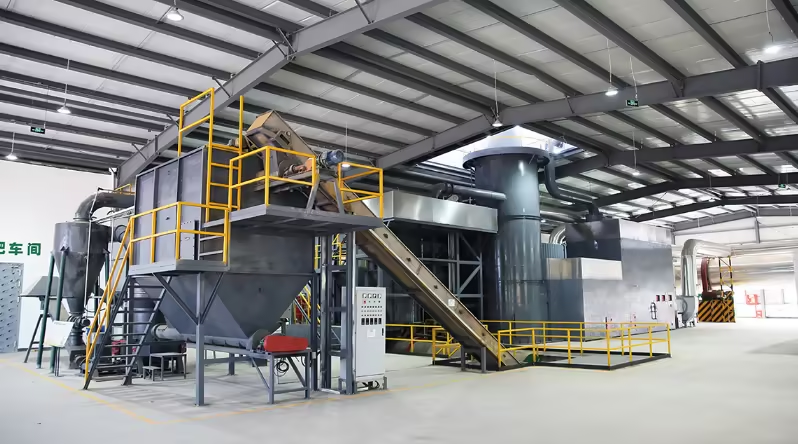
Burial and burning have long been the go-to solutions for getting rid of waste, but they come with hidden costs that are becoming impossible to ignore. Landfills swallow up vast tracts of land and can leak toxins into groundwater for decades, while incineration pumps out ash laced with heavy metals and a cocktail of air pollutants. Pyrolysis steps in with a fundamentally different approach: by heating waste in an oxygen‑starved chamber, it sidesteps combustion entirely. No flames means no dioxins or furans forming in the exhaust, and the solid residue left behind is a stable, charcoal‑like char that locks away carbon rather than letting it escape into the atmosphere as methane or CO₂.
What really sets pyrolysis apart is its ability to turn rubbish into a resource rather than a liability. Traditional methods at best recover a trickle of energy from incineration, but most of the material is lost forever. In a pyrolysis reactor, complex hydrocarbons break down into three valuable streams: a synthetic gas that can fuel generators or be upgraded to hydrogen, a bio‑oil that refineries can turn into chemicals or clean fuels, and that carbon‑rich char, which improves soil when used as biochar. It’s a closed loop that makes financial sense without relying on subsidies, especially as the market for low‑carbon products continues to grow.
Scalability is the final piece of the puzzle. Mega‑landfills and huge incinerators need equally massive amounts of waste to justify their existence, locking communities into long‑term contracts and centralized infrastructure. Pyrolysis units, on the other hand, can be built to match local waste streams—from a university campus handling cafeteria scraps to a rural town dealing with agricultural plastic. This modularity slashes transport emissions, reduces collection costs, and puts waste processing back into the hands of the people who generate it, all while quietly outperforming the old ways on nearly every environmental and economic measure.
Engineering Breakthroughs Behind Modern Pyrolysis Equipment
Modern pyrolysis systems no longer rely on brute-force heating; they have evolved into precision-driven reactors where thermal degradation is managed with surgical accuracy. One of the quiet revolutions is the integration of real-time mass spectrometry and advanced thermocouple arrays that map temperature gradients not just across the reactor walls but within the moving feedstock bed itself. This allows operators to prevent hot spots that would otherwise churn out unwanted char or tars, while simultaneously identifying the exact moment volatiles are released—making the difference between a low-value bio-oil and a petrochemical-grade feedstock. The shift from fixed-bed to fluidized-bed architectures, and more recently to twin-screw and microwave-assisted configurations, has shattered old constraints, enabling continuous processing of heterogeneous waste with minimal pre-treatment.
Another underappreciated breakthrough lies in the condensation train. Early units simply knocked out liquids in a haphazard series of chilled vessels, yielding a messy emulsion that was almost impossible to upgrade. Today’s designs use staged fractional condensation matched to the boiling point curves of target compounds, supported by electrostatic precipitators and demisters that can isolate specific chemical families mid-process. Some facilities now run cryogenically cooled supersonic nozzles to freeze reaction intermediates before they degrade, capturing molecules that were previously lost. This downstream finesse has boosted practical yields by 20–30% without touching the reactor itself, proving that innovation in pyrolysis is as much about what happens after the reactor as inside it.
The real game-changer, however, is the digital twin. By coupling first-principles kinetic models with machine learning trained on plant data, engineers can simulate thousands of feedstock variations and operating scenarios overnight, then adjust the physical unit in near real-time. Feedstock that varies in moisture, ash content, or particle size—problems that once caused shutdowns—is now handled by adaptive control loops that fine-tune residence time, heating rate, and gas flow on the fly. This marriage of thermal engineering and data science has transformed pyrolysis from a batch-oriented art into a robust, self-optimizing industrial process, quietly enabling the economics that finally make large-scale deployment feasible.
Custom Reactor Designs for Diverse Feedstock Challenges
Every feedstock carries its own quirks, and a one-size-fits-all reactor rarely does the job. When you're working with heavy crudes, for instance, you need internals that can handle high coking tendencies without choking up every few weeks. That might mean a fluidized bed design with continuous catalyst regeneration, or a clever baffle arrangement that keeps solids suspended just long enough to crack the tough stuff. The geometry shifts completely when you switch to light, gassy feeds—here, residence time and mixing become the prime concerns, pushing you toward a multi-stage riser or a downflow configuration that prevents backmixing and thermal cracking runaway.
Then there's the biorefinery space, where plant oils and waste greases throw their own curveballs. These oxygenated feeds can corrode standard stainless steel and gum up catalyst pores. A reactor tailored for them often incorporates specialized alloy linings or ceramic coatings, plus a feed injection system that atomizes the grease into a fine mist to maximize contact with the catalyst without creating hot spots. Some teams are even exploring rotating bed reactors that use centrifugal force to drive the reaction, slashing residence times and avoiding side reactions that ruin product yield.
Plastic waste recycling adds another layer of complexity. Mixed plastic streams melt unevenly, contain halogenated contaminants, and generate a sticky char that hugs reactor walls. To deal with this, some plants are adopting auger-driven pyrolysis reactors with scraper blades that continuously remove char, or twin-screw configurations where one screw feeds while the other cleans. The chamber must also manage rapid pressure swings as volatiles evolve unpredictably, so burst disc and relief valve placement becomes almost an art form. It's this kind of custom engineering—attuned to exactly what's in the feed and how it behaves—that keeps marginal feedstocks viable when commodity prices dip.
Integrating Continuous Monitoring for Unmatched Safety and Efficiency
Bringing continuous monitoring into daily operations transforms how teams manage risk and streamline workflows. Instead of relying on periodic checks, real-time data feeds provide an always-on view of system health, environmental conditions, and equipment status. This shift means that potential issues are flagged long before they escalate, allowing for proactive intervention that keeps both personnel and assets safe while minimizing unplanned downtime.
The real power of this approach lies in its ability to unify disparate data streams into a single, coherent picture. Operators gain instant insight into performance trends, energy consumption patterns, and compliance metrics without sifting through scattered reports. That clarity speeds up decision-making and reduces the cognitive load on teams, especially during high-pressure situations. As a result, routine tasks become more predictable, and unexpected disruptions lose their edge.
Adopting continuous monitoring also cultivates a culture of ongoing improvement. The subtle deviations captured by sensors and analytics tools often point to underlying inefficiencies that would otherwise go unnoticed. By acting on these insights, organizations can fine-tune processes, extend the lifespan of critical machinery, and consistently meet safety benchmarks. Over time, the compounding effect of small, data-driven adjustments yields a level of reliability and operational excellence that sets a new standard in the industry.
Real-World Impact: Case Studies in Sustainable Material Recovery
A few years back, a mid-sized electronics manufacturer in Germany decided to overhaul its entire waste management system. Instead of sending scrap metals and plastics to landfill, they partnered with a local recycling innovator that could recover over 95% of the materials. The result wasn’t just a cleaner environmental scorecard—it slashed their raw material costs by nearly a third within two years.
Over in Ghana, a community-led initiative took on the overwhelming challenge of e-waste from discarded mobile phones. By training locals to safely dismantle components and extract precious metals, the project turned a toxic dumping ground into a thriving circular economy hub. Today, they reclaim gold, copper, and palladium while providing steady income to hundreds of families, proving that sustainable recovery can fuel genuine social transformation.
These stories aren’t outliers; they signal a quiet shift in how we think about waste. From a multinational beverage company redesigning bottles for endless recycling loops to a small startup making building materials from shredded plastic, the real-world impact is tangible. It’s not just about doing less harm—it’s about actively replenishing supply chains and communities.
FAQ
Our equipment handles a broad range of materials, including waste tires, plastics, rubber, oil sludge, and biomass. Each system is configured to match the specific feedstock, ensuring optimal conversion rates without extensive pre-treatment.
We use a closed-loop heating design that recycles hot gases back into the reactor. This minimizes external fuel consumption, while advanced insulation and heat exchange systems push overall thermal efficiency above 80% in most configurations.
Depending on the feedstock, you typically get pyrolysis oil, combustible gas, carbon black, and steel wire. The oil can be used as industrial fuel or further refined, while the carbon black is suitable for rubber reinforcement or as a solid fuel.
Absolutely. We offer modular designs that scale from small batch units to continuous, high-throughput plants. Layout, emission controls, and automation levels are all tailored to fit site constraints, local regulations, and your processing goals.
Our systems include multi-stage scrubbing, dust removal, and flue gas purification. Continuous emission monitoring and a fully sealed process prevent leaks. We also provide documentation and support to help you obtain local operating permits.
We send experienced engineers for on-site supervision, commissioning, and staff training. Remote monitoring tools and a dedicated service team provide ongoing diagnostics, spare parts, and troubleshooting to keep your plant running smoothly.
Routine maintenance is straightforward—mostly inspecting seals, cleaning burners, and checking electrical connections. We schedule preventive maintenance visits and keep critical parts in stock so any necessary replacements happen quickly with minimal downtime.
Conclusion
As a leading pyrolysis equipment manufacturer, we are reshaping waste processing with advanced thermal conversion systems that consistently outperform traditional disposal methods. Unlike incineration or landfilling, our pyrolysis technology operates in oxygen-free environments, breaking down diverse waste streams—plastics, tires, biomass, and electronics—into valuable outputs like bio-oil, syngas, and biochar. This approach not only diverts massive volumes from landfills but also slashes greenhouse gas emissions and prevents toxic residues. The engineering behind these systems reflects decades of refinement: precisely controlled heating zones, corrosion-resistant alloys, and heat recovery loops that slash energy consumption. These breakthroughs translate directly to lower operating costs and higher throughput, making sustainable waste management economically attractive.
Every feedstock presents unique challenges, which is why we offer custom reactor designs—adjusting geometry, residence time, and heating profiles to maximize yield and purity. Our systems integrate continuous IoT monitoring, with sensors tracking temperature, pressure, and gas composition in real time, enabling predictive maintenance and instant safety responses. This level of oversight ensures round-the-clock efficiency and unparalleled safety. The real-world impact is clear: a tire processing plant in Europe reduced its landfill waste by 90% while generating high-grade recovered carbon black for new tire manufacturing. Another facility in Southeast Asia converts palm kernel shells into biochar, improving soil fertility and sequestering carbon. These case studies highlight how our equipment drives sustainable material recovery and anchors circular economies globally.
Contact Us
Contact Person: Ellen Zhang
Email: [email protected]
Tel/WhatsApp: +86(21) 2287 6756
Website: https://www.tundrr.com/en/
