
Import Pyrolysis Equipment the Smart Way with This Buyer Checklist
2026-10-25
Most pyrolysis equipment buyers don't fail because of bad tech—they fail because they skip the wrong questions. That's exactly why this checklist exists. Tundrr has distilled the procurement process into a practical, no-nonsense guide that exposes hidden costs, design compromises, and supplier gaps before they become your problem. If you'd rather negotiate from a position of strength, start here.
Know Your Feedstock Composition Before Comparing Models
One of the most overlooked steps before comparing pyrolysis or gasification models is pinning down what the feedstock actually contains. Two samples both labeled as “wood” can differ wildly in extractives, ash, bark content, and the ratio of cellulose to lignin. If those differences are not measured first, any discrepancy between model predictions gets wrongly assigned to the kinetic scheme or reactor assumptions, when in fact the input composition is driving the mismatch.
Take a softwood with 28% lignin and a hardwood with 22% lignin but higher xylan content. At identical heating rates, their devolatilization profiles can diverge by several percent in char yield and gas composition. A model tuned on one feedstock will perform poorly on the other unless the feedstock-specific fractions are updated. Before trusting a comparison, run at least proximate analysis, ultimate analysis, and if possible a compositional assay for cellulose, hemicellulose, lignin, and ash. Without these, the model is calibrated to an unknown baseline.
For waste-derived or blended materials, the situation gets messier because particle-level heterogeneity and moisture distribution shift reaction fronts. A practical approach is to build a small composition fingerprint for each batch and use that as a fixed constraint across all model runs. Then compare models under the same feedstock definition, not under the same feedstock name. This simple discipline removes one of the largest hidden variables in thermochemical modeling.
Check the Supplier's Installed Base and After-Sales Support
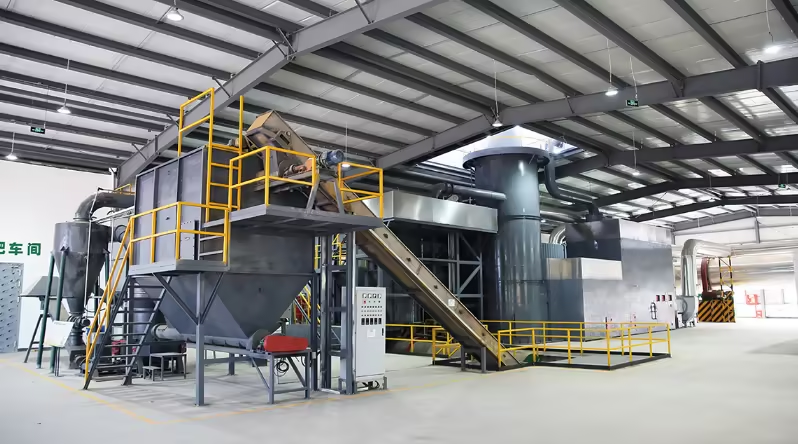
A supplier's existing footprint often tells a clearer story than any sales pitch. Look beyond the brochure and ask where their equipment is actually running today. If they have a proven base in facilities similar to yours, that's a strong signal they understand the daily realities of your operation. More importantly, find out what happened after installation. Did they stay engaged when a line went down at 2 a.m., or did they vanish once the invoice cleared?
After-sales support quality can vary wildly, even among suppliers with similar product specs. Try to get direct references from current users, not just curated case studies. Ask specific questions: How quickly do they ship replacement parts? Are their technicians familiar with older models? Do they offer remote diagnostics, or is every issue a site visit? A supplier with deep local support and a habit of long-term partnerships is worth far more than one with a flashy demo and a thin service network.
Another dimension often overlooked is the supplier's willingness to share performance data from their installed base. If they can show uptime statistics, mean time between failures, or real-world throughput figures from similar customers, that's a sign of confidence. If they deflect or offer only vague assurances, treat that as a red flag. The best suppliers treat after-sales support not as a cost center but as the core of their customer retention strategy.
Verify Real Throughput and Energy Use, Not Nameplate Numbers
Rated specs can be seductive—but they rarely survive contact with your actual workload. When a motor, pump, or compressor arrives with a shiny efficiency badge, that number is usually measured under a narrow set of laboratory conditions: fixed load, ideal voltage, steady temperature. Your facility is not a lab. Instead of trusting the nameplate, install portable power meters or use built-in energy monitoring to capture real-time voltage, current, and power factor over at least a week of normal operation. You'll often find that a machine running at 60% load draws far more energy per useful output than the datasheet implies, or that start-stop cycles dominate actual consumption in ways no static label can capture.
To get a true picture of throughput and energy use, pair electrical measurements with physical output data. Count units produced, gallons moved, or cubic feet compressed during the same measurement window. Then calculate a real-world energy intensity metric—kWh per unit, per gallon, per cubic foot—rather than relying on percentage efficiency. This approach often reveals hidden mismatches: a pump specified for peak demand that spends most of its day throttled by a valve, or a conveyor motor oversized for the average load. Those mismatches waste energy not because the equipment is faulty, but because the nameplate number was never designed to reflect your actual operating envelope.
Once you have verified data, use it to drive decisions. A machine that underperforms its rated efficiency at your typical load might benefit from a variable frequency drive, right-sizing, or rescheduling to avoid partial-load operation. Keep a simple log of measured energy per unit output, and revisit it after any process change. Over time, this habit of checking real numbers instead of catalog specs will uncover savings that brochures never mention—and it will give you the confidence to question any future purchase that leans too heavily on a label.
Estimate True Landed Cost Including Freight, Duties, and Setup
Calculating the true landed cost goes far beyond the supplier's invoice price. Freight charges can swing dramatically depending on whether you opt for air, sea, or rail, and they often include port handling fees, insurance, and last-mile delivery that slip under the radar in initial quotes. Without adding these numbers up front, you risk approving a product that quietly erodes margin once it reaches your warehouse.
Import duties and taxes are another layer that demands precision. Tariff codes vary by material composition and country of origin, and a small misclassification can trigger unexpected penalties or delayed clearance. Factor in customs brokerage fees, bond costs, and any applicable anti-dumping or countervailing duties, and the difference between estimated and actual cost can be startling.
Setup and tooling expenses frequently get treated as afterthoughts, yet they can account for a significant share of your initial investment. Molds, dies, jigs, and testing fixtures often need to be amortized over the first production run, not buried in a separate budget. By mapping every component—freight, duties, brokerage, setup, and even financing costs—you get a number you can actually plan around.
Pin Down Emission Standards and Permit Requirements
Most facilities stumble not because they ignore emission rules, but because they assume a single permit covers everything. A refinery, for instance, might hold a Title V permit yet still need separate preconstruction approvals for a new boiler. Start by mapping each source—stacks, vents, storage tanks, even fugitive leaks—against the exact standard that applies, whether that’s a federal NSPS, a NESHAP, or a state rule with tighter limits.
Then pull the permit’s fine print. Look beyond the headline pollutant limits to monitoring schedules, recordkeeping formats, and startup/shutdown exemptions. Many compliance gaps hide in footnotes: a requirement to calibrate CEMS every 90 days, or a condition that flaring is allowed only during specific upset events. Convert these into a plain-language obligation checklist, with owner, deadline, and evidence needed for each item.
Finally, pin down the version that applies today. Standards get revised, permits get reopened, and agency memos shift interpretations. Check the latest incorporation-by-reference date in your state’s administrative code, not just the federal eCFR. If there is any mismatch between permit language and current standard, request a permit modification or at least document the discrepancy in your compliance log.
Require a Trial Run or Third-Party Performance Report
Before you sign off on a purchase or partnership, push for a hands-on evaluation period. A pilot run with your own team often surfaces quirks that polished demos and spec sheets gloss over—such as how the tool handles your existing data formats, whether its support team responds when something breaks mid-workflow, or if the promised uptime holds under your actual load. Set clear pass/fail criteria ahead of time, and don't let a vendor talk you into accepting a shortened trial that only covers the happy path.
When a trial isn't feasible, ask for a performance report produced by an independent third party rather than a hand-picked case study. Review the sample size, testing conditions, and any limitations noted in the fine print. Calls with a couple of current customers who run workloads similar to yours often tell you more than a glossy benchmark. Be wary of vendors who will not share raw data or who dismiss requests for verifiable results as unnecessary—it's usually a sign that the numbers won't stand up to scrutiny.
FAQ
Start with how many units they have actually shipped for your material. Get names of running plants, not just brochure pictures. A supplier who has processed mixed plastic waste or scrap tires before will save you months of trial runs. Ask how long the current reactor design has been in production—not the company age, the design age.
Have them test your exact feedstock, even if you have to pay a small fee. Moisture, chlorine, and ash content decide whether you need pre-treatment like drying or shredding. Ignore the brochure's 'suitable for all plastics' claim; that usually means it's optimized for none.
CE marking for Europe, ASME or PED for pressure vessels, ISO 9001 for the factory. Also check if your country requires a pre-shipment inspection or a specific certificate of origin. A seller waving a single 'international standard' certificate often hasn't dealt with your customs authority.
Beyond freight, watch for customs brokerage, HS code duty surprises, and the cost of a local engineer to sign off on installation. Spare parts shipped separately can get stuck for weeks, so bundle them with the main unit. And don't forget utility upgrades—transformers, water treatment, or nitrogen supply can add thousands.
Never pay the full balance before inspection. Use a third-party inspector to check reactor wall thickness, weld quality, and control panel wiring. Better yet, attend a factory acceptance test yourself or via live video. It's much cheaper to reject a bad unit at the factory than to argue from across the ocean.
The biggest trap is picking the wrong Incoterm and not knowing who pays for inland trucking or unloading. Also, many buyers forget their local electricity is different from the manufacturer's—motors and controls may need conversion. If the foundation and utilities aren't ready when the machine arrives, demurrage and idle crew costs pile up fast.
Not if your feedstock supply can't keep up. A 20-ton-per-day unit running half-empty wastes fuel and wears out faster. Match the machine to your realistic weekly volume, not your five-year dream. A smaller unit that runs daily usually beats a large one that starts twice a week.
Support is the hidden price tag. Ask for actual response times, not promises. Check if they stock critical spares like reactor seals, temperature sensors, and feed auger parts. A cheap machine with no remote diagnostics and slow spare delivery can cost more in downtime than you saved at purchase.
Conclusion
Too many buyers jump straight into comparing pyrolysis machines without first understanding what they'll actually be feeding them. Feedstock composition determines reactor design, pre-treatment needs, and whether you'll hit your oil or gas yield targets. Before you even request a quote, know your moisture content, ash level, particle size range, and whether plastics, tires, or biomass dominate the mix. Then look beyond the glossy brochure: ask the supplier for a list of operating plants you can call, and check how they handle after-sales support, spare parts lead times, and operator training. A manufacturer with a thin installed base or slow technical response can turn a bargain into a stranded asset.
Don't trust nameplate throughput or energy consumption figures without verification. Ask for actual production logs from similar feedstock under continuous operation, and calculate kilowatt-hours per ton of finished product. Freight, duties, port handling, civil works, and commissioning can add thirty to fifty percent to the machine price, so get a landed-cost breakdown before comparing bids. Emission limits and local permits vary widely; make sure the supplier's flare stack, scrubber, and wastewater plan will pass your region's environmental review. Finally, insist on either a trial run with your own material or an independent third-party performance report. These steps separate serious vendors from those selling on paper specs alone.
Contact Us
Contact Person: Ellen Zhang
Email: [email protected]
Tel/WhatsApp: +86(21) 2287 6756
Website: https://www.tundrr.com/en/
