
China Chemical Equipment & Technology Trade: Emerging Opportunities and Global Market Insights
2026-08-20
If you’re still treating China’s chemical equipment market as a commodity play, you’re already behind. The trade in chemical equipment and technology is being redrawn by precision manufacturing, sustainability mandates, and regional supply chain realignments. These shifts are creating openings that don’t fit the old export-import playbook. ICIF sits at the intersection of this transformation, giving buyers and suppliers a clearer view of what’s next. In this post, we explore the emerging opportunities and global market insights shaping China’s chemical equipment and technology trade — and why the usual assumptions no longer hold.
Why Chinese chemical equipment is finding buyers in unexpected markets
The shift is not about lower prices alone. Buyers in places like Uzbekistan, Nigeria, and Peru often face power fluctuations, water scarcity, or logistics bottlenecks that standard European equipment simply isn't built to handle. Chinese manufacturers have learned to ask different questions during the sales process: What voltage does the site actually run on? How often do you lose grid power? Can a local technician fix this without flying in an expert? That practical focus turns what used to be a commodity purchase into a tailored solution, and it's earning trust in markets where downtime is measured in lost harvests or missed export windows.
Another factor is the rise of modular and skid-mounted designs coming out of Chinese engineering firms. Instead of shipping a dozen separate vessels and hoping they fit together on-site, buyers get a pre-assembled unit that can be trucked to a remote mine or a small refinery. This matters enormously in regions with weak crane availability or a shortage of certified welders. A plant manager in Ghana or Bolivia can be operational in weeks, not months, simply because the equipment arrives as a single bolted-together block. That speed of deployment often outweighs the longer warranty periods offered by Western competitors.
Financing plays an understated role. Many of these unexpected markets are not cash-rich, yet they need to upgrade aging chemical processing lines to meet local fuel standards or fertilizer demand. Chinese equipment suppliers frequently work with export credit agencies or link deals to broader infrastructure loans, making the purchase far more feasible for a mid-sized distributor in Bangladesh or a state-owned enterprise in Ethiopia. Unlike traditional project finance that takes years to arrange, these arrangements can be structured in a matter of weeks, and the equipment often arrives alongside the civil works teams building the very roads or ports that will move the finished product.
The technology leap quietly reshaping export competitiveness
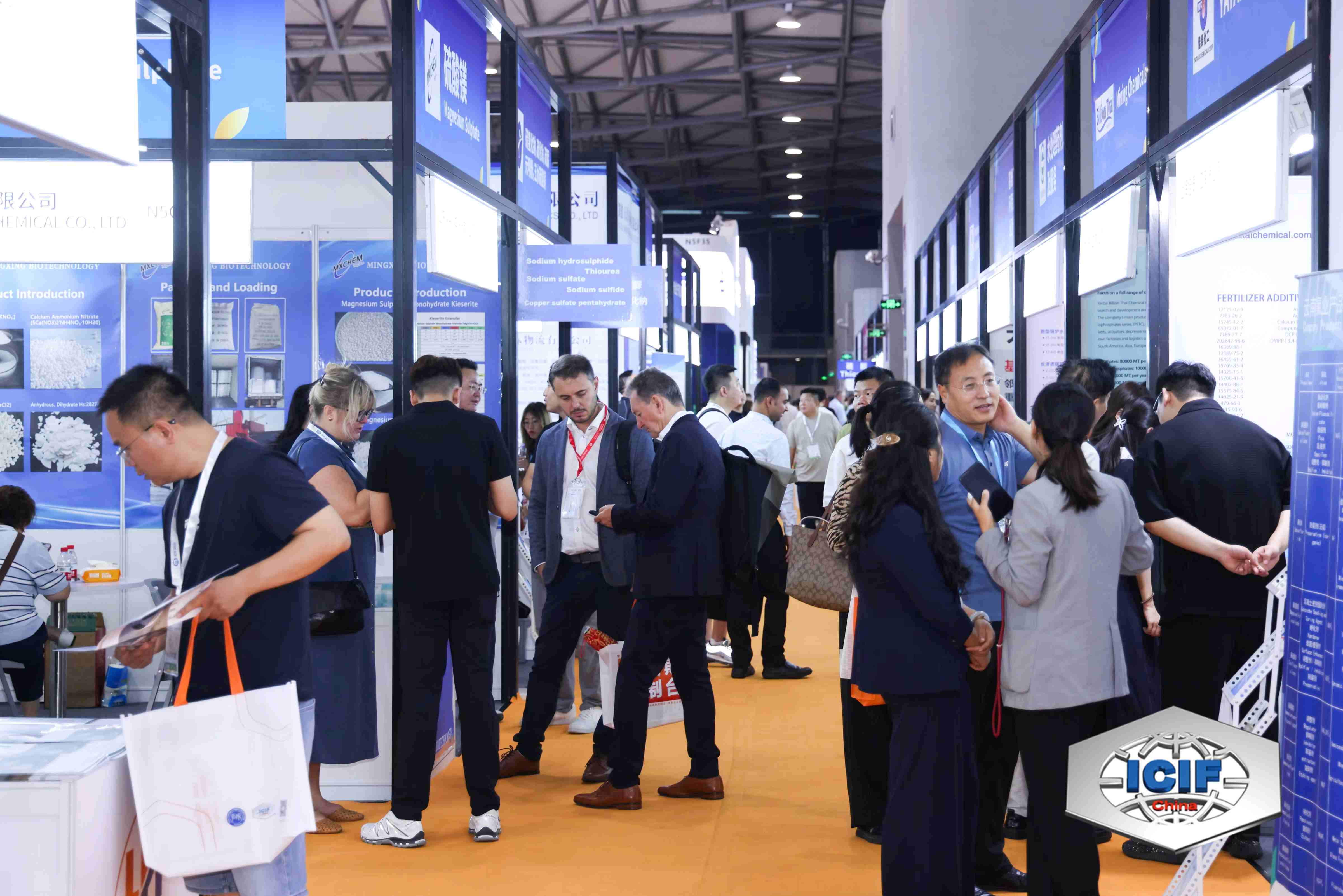
Export competitiveness used to hinge on wage levels, shipping lanes, and tariff schedules. Those factors still matter, but a quieter shift is under way: advanced manufacturing tools, sensor-driven quality control, and modular automation are letting smaller producers match the consistency once reserved for industrial giants. A mid-sized factory in Vietnam can now integrate machine-vision inspection that rejects defective parts in milliseconds, a capability that previously demanded capital outlays only multinationals could absorb.
This quiet leap is not about replacing workers with robots, but about shrinking the gap between design intent and production reality. Digital twins of export batches travel ahead of physical cargo, flagging tolerances and regulatory mismatches before containers ever reach a port. The result is fewer rejected shipments, shorter lead times, and a growing ability to serve high-margin niches in Europe and North America without owning a single overseas warehouse.
For trade policymakers and logistics providers, the old maps of advantage are losing resolution. Countries that train technicians in predictive maintenance, data interchange formats, and flexible line reconfiguration are seeing their export baskets shift toward precision components and customized goods. The leap is subtle—no single invention dominates—but its cumulative effect is a reordering of who can reliably deliver what the global market wants, and at what cost.
Where demand is heating up beyond traditional trade partners
Buyers in places like Vietnam, Mexico, and the Gulf states are placing larger and more frequent orders, a shift that goes well beyond the usual reliance on North American and European markets. The pull is strongest in categories tied to industrial components, renewable energy equipment, and mid-range consumer electronics, where local manufacturing and infrastructure projects are expanding quickly.
Part of what makes this momentum durable is the rise of regional intermediaries—distributors and trading houses in places such as Dubai, Monterrey, and Ho Chi Minh City—who now carry enough inventory to serve smaller buyers without waiting on direct shipments. That has shortened lead times and made price discovery more transparent in markets that were once considered secondary.
At the same time, payment and logistics hurdles are easing. More suppliers are accepting settlement in local currencies or through escrow services tied to regional banks, which has lowered the risk premium that used to keep many exporters focused only on familiar partners. As a result, demand is spreading into second-tier cities and inland industrial zones rather than clustering around a few ports.
Supply chain shifts that favor regional manufacturing hubs
The last few years have quietly redrawn the map of global production. Where once a single factory in a distant low-cost country could feed entire continents, companies now weigh the hidden costs of long supply lines: port congestion, political friction, freight volatility, and the simple fragility of relying on one node for everything. This has pushed many manufacturers to shorten their reach and build capacity closer to final customers. The result is not a wholesale retreat from globalization, but a rebalancing toward regional hubs that offer both stability and speed.
These hubs are not chosen purely on wage arbitrage anymore. Access to skilled labor, reliable energy grids, predictable trade policies, and proximity to key markets now dominate site-selection decisions. Mexico and Eastern Europe have benefited from nearshoring for North American and Western European demand, while Southeast Asia has gained from the diversification away from single-country dependency. At the same time, industrial parks in less obvious locations—such as northern Vietnam, central Poland, or the US-Mexico border zone—are absorbing investment that previously would have gone to a handful of mega-factories overseas.
This shift also changes how products are designed and sourced. Instead of optimizing for container-load efficiency over thousands of miles, businesses increasingly favor modular designs, local supplier ecosystems, and shorter replenishment cycles. That encourages regional manufacturing hubs to develop deeper, more specialized industrial clusters—not just assembly plants, but tooling, components, and aftermarket services nearby. Over time, these clusters become self-reinforcing, attracting further investment and talent, which makes the regional hub model harder to reverse and more resilient to future shocks.
Digital and automated equipment as the next export frontier
For decades, export competitiveness hinged on cheap labor and abundant raw materials. That playbook is losing relevance. A growing number of firms are finding that the real money lies not in shipping finished consumer goods, but in selling the digital and automated machinery that makes those goods—and increasingly, runs entire production lines with minimal human touch. From collaborative robots on assembly floors to AI-driven quality inspection systems, this category has quietly become the equipment foreign buyers now seek first.
What makes this shift durable is the service layer attached to the hardware. A CNC machine is just steel and motors until it is linked to predictive maintenance software and real-time data dashboards. That combination lets a manufacturer in one country sell not only a tool, but a measurable uptime guarantee, a training package, and ongoing remote diagnostics. Early movers are capturing long-term service contracts that dwarf the initial equipment sale, creating an export stream that is harder to copy than a simple price cut.
Green chemistry standards that open new overseas doors
Navigating the maze of overseas chemical regulations used to feel like decoding a foreign language without a dictionary. But the rise of internationally recognized green chemistry standards—such as those tied to life cycle assessments, renewable feedstocks, and safer solvent frameworks—has quietly rewritten the rulebook. Instead of treating sustainability as a niche add-on, these standards now function as a shared passport. A manufacturer in Vietnam, for instance, can align with a European-recognized green benchmark and suddenly find procurement teams in Germany or Sweden far more willing to open their supplier portals. It is less about waving a green flag and more about speaking a common technical dialect that removes friction from cross-border trade.
What makes these standards especially powerful is that they do not merely certify a final product; they force a rethink of the entire production chain. A textile mill aiming for a green chemistry certification soon realizes that the dyeing process, the solvent recovery rates, and even the packaging adhesives all come under scrutiny. This upstream discipline pays off when entering markets with strict chemical bans, because the documentation is already structured in a way that regulators in places like Japan or Canada recognize without demanding a mountain of retesting. In practice, companies that adopted these standards early often report that the same audit that once seemed burdensome became their strongest sales argument in markets where consumers actively check for environmental credentials.
There is also a subtle but critical shift in how these standards reshape competitive dynamics. Gone are the days when a supplier could win purely on price per kilogram while quietly externalizing pollution costs. Green chemistry standards create a tiered playing field where compliance is not just a checkbox but a signal of operational maturity. Smaller firms that invest in cleaner catalytic processes or bio-based alternatives often find they can leapfrog larger incumbents because the standard gives them a transparent way to prove their lower environmental footprint. As more countries tie import tariffs or public procurement preferences to verified green chemistry metrics, the overseas doors that once seemed locked by legacy relationships are now swinging open—not because of marketing slogans, but because the chemistry itself meets a higher, measurable bar.
FAQ
Several factors are at play. Chinese manufacturers have moved up the value chain, offering advanced reactors, heat exchangers, and separation units at competitive prices. Government incentives for high-end manufacturing and the push toward green chemistry have also improved product quality. At the same time, buyers in Southeast Asia, the Middle East, and Africa are expanding refining and petrochemical capacity, and they increasingly see Chinese suppliers as reliable partners for full-process packages rather than just individual components.
Southeast Asia stands out, particularly Indonesia, Vietnam, and Thailand, where new petrochemical complexes and specialty chemical plants are under construction. The Middle East continues to invest in downstream projects, and Chinese modular equipment and engineering services are gaining traction there. Africa's fertilizer and mining chemical sectors are another bright spot, driven by food security goals and mineral processing needs. Buyers in these regions often prefer Chinese technology because it balances performance with affordability and offers flexible financing options.
It has reshaped the product mix. Demand is rising for energy-efficient heat exchangers, waste heat recovery systems, and equipment compatible with bio-based feedstocks. Chinese suppliers are exporting more catalytic converters, membrane separation units, and electrolyzers for green hydrogen. Technology transfer now often includes process optimization to reduce emissions, not just hardware delivery. This shift helps Chinese exporters differentiate from competitors focused only on low-cost standard equipment.
Quality consistency and after-sales support remain top concerns, especially for smaller suppliers. Buyers also need to navigate differences in certification standards such as ASME, PED, or API. Logistics for large, heavy equipment can be complex, and language or time zone barriers sometimes slow project communication. However, established Chinese manufacturers are addressing these issues by investing in third-party inspections, setting up overseas service centers, and training multilingual project managers.
Digital tools are transforming both sales and operations. Suppliers now use remote monitoring, digital twins, and predictive maintenance packages to add value beyond the equipment itself. Online platforms and virtual factory tours help international buyers evaluate capabilities without traveling. For technology trade, licensing agreements increasingly include software for process simulation and real-time optimization, making Chinese offerings more attractive for complex chemical projects.
The main advantage is cost-performance combined with faster delivery times for standardized and modular systems. Chinese firms also offer greater flexibility in customizing designs for local feedstocks or utility conditions. While European and Japanese suppliers still lead in ultra-high-precision or proprietary process technologies, Chinese companies are closing the gap in mid-range and large-scale equipment like pressure vessels, columns, and pumps. Increasingly, they bundle engineering, procurement, and construction support, which appeals to buyers seeking turnkey solutions.
There is growing interest in licensed process technologies for specialty chemicals, coal-to-chemicals, and recycling of plastics. Joint ventures are emerging around catalyst production, waste-to-energy systems, and carbon capture equipment. Many Chinese firms want to partner with overseas engineering companies to access final customers and meet local content rules. For technology owners, China offers a large manufacturing base and fast commercialization, while Chinese partners gain access to advanced know-how and international distribution networks.
Tariffs and export controls on certain high-tech materials can push buyers to diversify suppliers, but China's role in mid-stream chemical equipment remains hard to replace due to scale and infrastructure. Companies are also setting up assembly or service hubs in Southeast Asia and the Middle East to ease logistics and local compliance. Long-term, the trend toward regional supply chains may encourage more technology licensing and localized manufacturing rather than direct equipment exports, opening new partnership models.
Conclusion
Chinese chemical equipment makers are gaining traction in markets not traditionally associated with their exports—think Africa, Central Asia, and Latin America. Localized service networks and flexible financing are often cited by buyers, but the deeper story is a technology leap. Modular skid-mounted systems, advanced corrosion-resistant alloys, and real-time process control have moved several Chinese suppliers from low-cost alternatives to credible partners for mid-sized refinery and specialty chemical projects. Demand is visibly heating up in Southeast Asia and the Middle East as well, where new petrochemical complexes seek shorter lead times and adaptable engineering support. This shift isn't about chasing the lowest quote anymore; it's about fit, delivery reliability, and the ability to handle feedstock variability.
Supply chain recalibration is also playing a role. As global shipping costs fluctuate and Western manufacturers extend delivery windows, regional hubs in Vietnam, Indonesia, Turkey, and Saudi Arabia are sourcing more pressure vessels, heat exchangers, and automation-ready reactors from China. The next frontier is digital and automated equipment: smart valves, self-diagnosing pumps, and AI-assisted process optimization are becoming standard specifications rather than premium add-ons. Meanwhile, tightened environmental rules in the EU and North America are pushing buyers toward Chinese vendors who can demonstrate compliance with green chemistry benchmarks—low-emission coatings, energy recovery units, and zero-liquid-discharge modules. These standards don't just open doors; they're redefining which Chinese exporters can scale beyond one-off deals. The result is a more differentiated trade landscape, where technical documentation, after-sales engineering, and certification depth matter as much as price.
Contact Us
Contact Person: Shaozhen Zhou
Email: [email protected]
Tel/WhatsApp: 0086-18612117599
Website: https://en.icif.cn/