
Bulk Calcium Chloride 94% Granules What You Need to Know Before Buying
2026-10-25
Buying bulk calcium chloride 94% granules isn’t just about price per ton—it’s about avoiding dusty, underperforming loads that sabotage your de-icing, dust control, or drilling operations. Before you commit to a supplier, you need to understand purity variations, granule sizing, moisture content, and how packaging affects handling. This guide cuts through the sales chatter and highlights what actually matters in the field. We’ll also explain why partnering with a manufacturer like Shouguang Golden Chemical—rather than a middleman—can mean tighter specs, consistent supply, and responsive technical support.
Why 94% Purity Isn't Just a Number
When a label reads 94% purity, it's tempting to assume the remaining 6% is just inert filler or water. But for many substances—botanical extracts, research compounds, even food additives—that leftover fraction often contains isomers, residual solvents, heavy metals, or degradation byproducts that can alter how the material actually behaves. One lab's 94% batch might perform almost identically to a 98% version, while another's could trigger unwanted reactions or simply fail to work at all.
The figure also masks major differences in measurement. Depending on whether the lab used HPLC, GC, or titration, and whether they calculated purity on a dried or as-is basis, the same physical sample can produce different numbers. Some suppliers conveniently exclude water or solvent content from the calculation, while others don't. So two jars both stamped 94% can differ by several percentage points in true active content—and far more in the makeup of that unknown 6%.
For anyone relying on this material for research, formulation, or personal use, treating 94% as a fixed quality mark is a mistake. You need the certificate of analysis, the impurity profile, and ideally an independent third-party test. The real story is never in the headline number—it's in what that number refuses to tell you.
Granules vs. Flakes: What Actually Works for Your Job
If your daily routine involves measuring out a product into water or spreading it across a surface, you'll spot the difference between granules and flakes within the first hour. Granules tend to pour cleanly, dose consistently, and dissolve at a predictable rate, which matters when you're trying to keep a tank or batch within a tight spec. Flakes, on the other hand, can bridge in the scoop, pack down into clumps, and leave you guessing whether you've actually added the right amount.
That said, flakes aren't the weaker option just because they're messier. In jobs where speed matters, the thinner structure gives them more surface area, so they wet out and start working almost immediately. If you're dealing with a sudden pH swing, a clogged line, or an icy walkway before a client shows up, that fast reaction often beats the tidy pour of a granule.
What actually works comes down to the task, not the marketing on the bag. Keep a small pail of each on hand, test them on a real job, and you'll develop a feel for which one suits your equipment and timing. Most seasoned operators end up using granules for maintenance dosing and flakes for quick corrections, but the only wrong choice is assuming one form is universally better.
Bulk Buying Traps That Drain Your Budget
Bulk buying feels like a win at the register, but those oversized packs often hide a quiet leak in your budget. The biggest trap? Perishables. You grab a five-pound tub of spinach because the per-ounce price is unbeatable, then watch half of it turn to slime before you can use it. The same goes for giant jars of condiments or family-size packs of bread that go stale. If the item expires before your household can realistically finish it, the “savings” evaporate and you're effectively paying to throw food away.
Another trap is the false math of “stocking up” on things you don't actually use that often. A 12-pack of spicy mustard is only a bargain if you genuinely eat spicy mustard every week. Otherwise, that money is tied up in pantry clutter while your bank account takes the hit. And don't overlook the cost of storage: if you need to reorganize shelves, buy extra bins, or rent a bigger place just to hold your bulk haul, those hidden expenses can quickly outpace any upfront discount.
Finally, there's the psychological pull of warehouse club memberships. Paying an annual fee can pressure you to “get your money's worth,” which leads to impulse buys on oversized snacks, seasonal items, or gadgets you never planned to purchase. The real fix? Only bulk-buy non-perishables you already use at a steady clip, set a strict list before entering the store, and do the math on the total cost—including waste and storage—not just the price per unit.
Storage Habits That Turn Good Calcium Chloride Bad
Calcium chloride's biggest storage enemy is damp air. A bag left open in a humid garage starts pulling moisture within hours, turning hard and crusty long before the label's expiration date. Once that happens, the product won't dissolve evenly when you finally need it, whether it's for de-icing a walkway or balancing pool water.
Another overlooked mistake is storing it in metal bins or near anything made of steel. The dust and moisture calcium chloride attracts create a corrosive film that quietly eats through containers and nearby tools. Plastic buckets with tight gaskets work, but only if you wipe the rim dry before sealing. Even a small drip from refilling can glue the lid shut.
Temperature swings also accelerate clumping. Keeping a pail against an exterior wall in winter cycles it through freeze-thaw conditions, forcing moisture into the granules. A better spot is an interior shelf off the concrete floor, away from water heaters or sump pits. And never transfer it with a wet scoop—damp tools are how good product turns into a brick.
Reading a Supplier Beyond the Price Tag
A price tag that's 5% lower can turn into a pile of returned goods and a halted production line three months down the road. That's why judging a supplier solely by their quote often means paying far more in hidden costs later. A supplier worth keeping will point out tolerance issues in your drawings before you even place the order, or flag a raw material price spike before it hits your budget. None of that shows up in the unit price, but it steadily lowers your total cost of ownership.
Watch how a supplier handles surprises—that tells you more than any brochure. When a shipment gets stuck in customs, some suppliers wait for you to chase them and then send a vague email. Others notify you two days early, outline the risk, and attach a backup logistics plan. The latter might quote a few cents higher, but they protect your credibility with your own clients. That kind of reliability never appears on a price tag.
Also pay attention to whether a supplier is actively improving their own processes. Have they upgraded equipment recently? Do they invite a frank review of friction points after each order? A supplier who puts problems on the table and adjusts willingly beats one who just nods along. Price is only the entry point; the real costs and benefits live in the day-to-day details of how you work together.
The Hidden Risks of Overlooking Moisture Control
Moisture often gets treated as a background nuisance until a wall starts sweating or a floor buckles. The real problem is what happens before visible damage: condensation inside wall cavities, slow corrosion of metal fasteners, and mold colonies that establish themselves long before the musty smell appears. By the time you notice peeling paint or a warped door frame, the structural and health costs have already started compounding.
Overlooking this also means underestimating how fast small leaks become systemic. A poorly sealed window flashing might not seem urgent in dry weather, but a single humid season can drive moisture deep into insulation and sheathing, turning a minor fix into a full tear-out. And it's not just buildings—stored inventory, electronics, and even paper records quietly degrade when ambient humidity drifts above safe thresholds.
The less obvious risk is the one that shows up later as a legal or insurance headache. Many policies exclude gradual moisture damage, assuming the owner failed to maintain proper ventilation or drainage. So the hidden cost isn't just the repair bill; it's the denied claim, the respiratory issues from hidden mold, and the loss of asset value that never gets flagged in a routine walkthrough.
FAQ
That percentage refers to the active calcium chloride content by weight. The remaining 6% is mostly water, a small amount of sodium chloride, and trace minerals. In real-world terms, it means you get slightly less melting power or moisture absorption per pound than a 96% or 98% product, so you may need to use a little more to hit the same performance level.
Ask the supplier for a typical particle size range and, if possible, a dissolution test sample. Smaller granules or a wider size distribution tend to dissolve quicker, but if you need very rapid dissolving, you might want a more uniform fine granule rather than a coarse mix. Water temperature and agitation also play a big role, so test a small batch under your actual operating conditions before committing to a full truckload.
Yes, and it matters depending on your use. Food-grade has stricter limits on heavy metals and other impurities, which is critical for cheese making, brewing, or drinking water treatment. Technical-grade is often cheaper and fine for de-icing, dust control, or concrete acceleration, but it may contain higher levels of iron or magnesium that can stain surfaces or affect certain chemical processes. Always match the grade to your end use instead of assuming higher purity is automatically better.
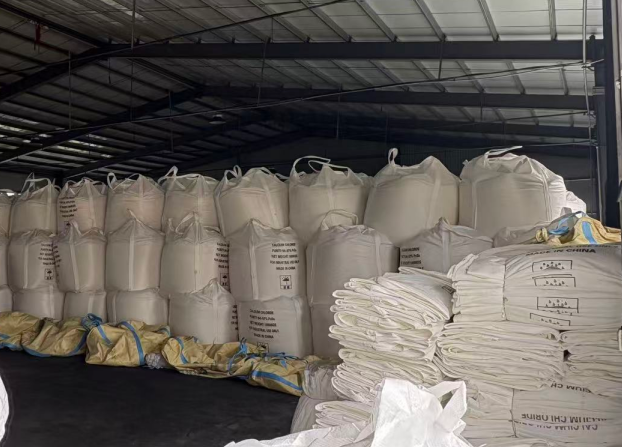
Look for moisture-proof liners, intact seals, and clear labeling with the batch number and net weight. Calcium chloride pulls water from the air aggressively, so if bags are torn, damp, or clumped into hard lumps, that already shows moisture damage. For super sacks or bulk truck shipments, confirm the hatch or discharge point is dry and ask for a weight ticket to verify you're getting the tonnage you paid for.
It's not recommended. Even double-wrapped bags will eventually absorb moisture through small tears or seams, and the granules can turn into a wet slurry that's hard to handle. If you must store outside, keep the pallets covered with a heavy tarp, elevate them off the ground, and rotate stock so the oldest material is used first. A dry, covered area with low humidity is always the safer choice.
At minimum, wear chemical-resistant gloves, safety goggles, and a dust mask or respirator if you're pouring or moving large amounts. Calcium chloride generates heat when it contacts moisture, so sweat or wet skin can cause burns. Long sleeves and pants help prevent direct contact. Keep clean water nearby for rinsing, and never add water to a large pile of granules because the exothermic reaction can get intense.
Generally no. Bulk pricing is almost always lower per pound than buying 50-pound bags because you save on packaging, palletizing, and handling. However, if you lack proper storage or can't use the material within a few months, buying a smaller quantity can actually cost less overall by avoiding spoilage and waste. Also factor in freight: a full truckload gives you the best per-ton rate, while less-than-truckload shipments can make smaller orders surprisingly expensive per unit.
Conclusion
Buying calcium chloride in bulk isn’t just about grabbing the cheapest pallet you can find. That 94% figure on the spec sheet sounds technical, but it directly shapes how much ice melts, how quickly concrete sets, or how dry your storage area stays. Lower purity means you’re paying for water and impurities that do nothing but add weight. Then there’s the form question: granules dissolve fast and spread evenly, while flakes can clump and leave you fighting uneven coverage. If your job needs consistent performance, granules usually win, even if they cost a few cents more per pound. The real budget killers aren’t the unit price—they’re hidden freight surcharges, minimum order penalties, and pallets that arrive half-caked from poor handling. Ask suppliers to quote the delivered cost per usable pound, not the sticker price.
Once the shipment lands, your habits decide whether that product stays effective or turns into a brick. Calcium chloride pulls moisture from the air, so leaving bags open or storing them on damp concrete invites clumping and weakens the material long before you use it. Keep it sealed, off the floor, and away from high-humidity zones. Moisture control isn’t just a storage footnote—it’s the difference between a clean pour and a frustrating shovel fight. Dig into how a supplier packages and dates their stock. A low price means nothing if the granules arrive already hardened or the supplier can’t tell you when they were bagged. Look for vendors who use moisture-barrier liners and rotate inventory frequently. Your total cost includes the labor you lose fighting clumps and the product you throw away when storage goes wrong, not just the dollars on the invoice.
Contact Us
Contact Person: Tom Cui
Email: [email protected]
Tel/WhatsApp: +8618663670626
Website: https://www.jinjigoldenchem.com